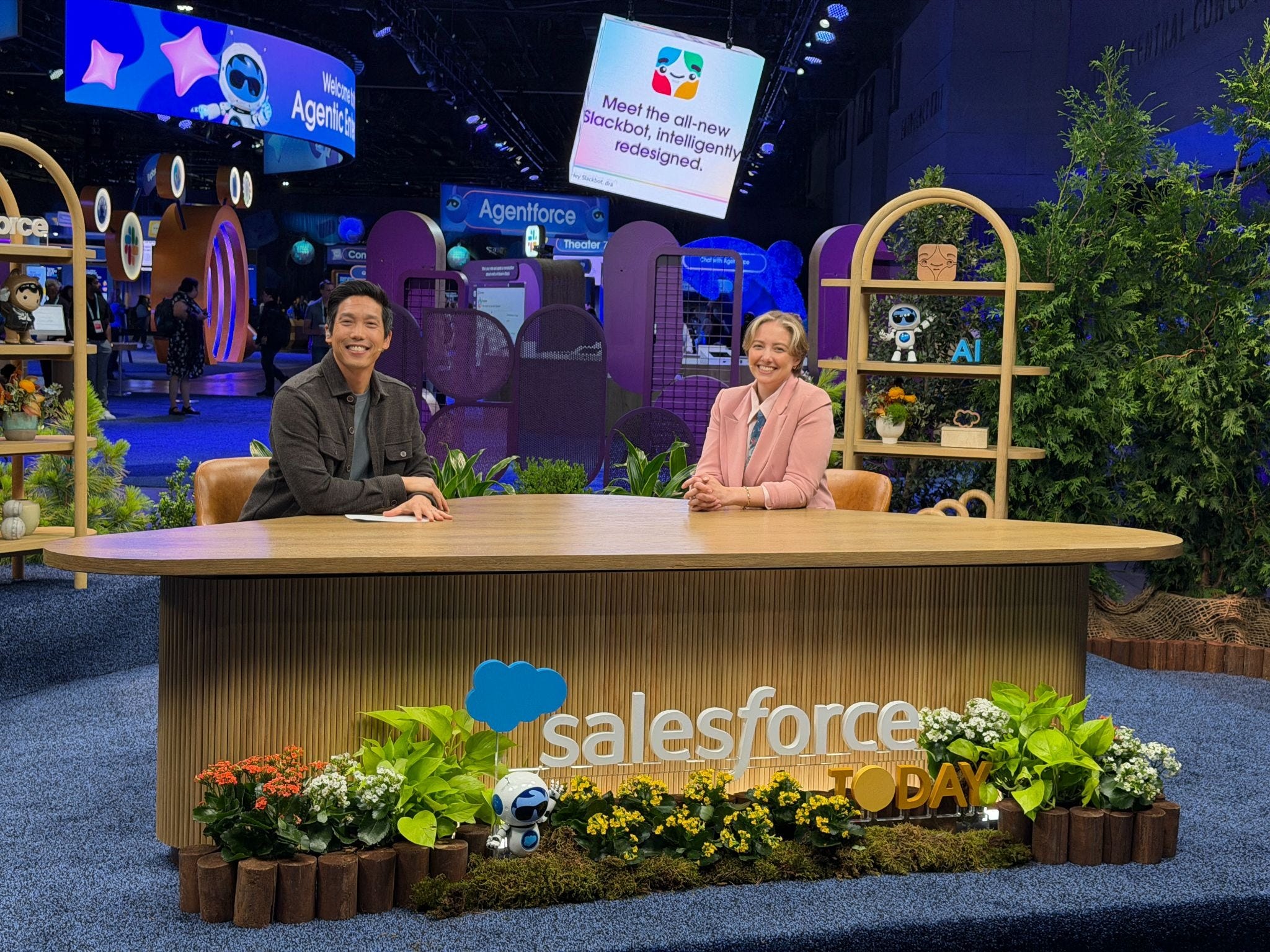
“Humans Being, Agents Doing”
My Field Notes from CNX 2026

Sponsored by Salesforce #SalesforcePartner
7,000+ marketers and I gathered last week in Chicago for Salesforce Connections (CNX) to hear how brands are moving from the hype of AI agents into real practice with real benefits.
If you want to jump right to the latest announcements from this week, read them here.
Here are 5 shifts I saw happening across marketers, customers, and brands.
1. Marketers are getting an agency of agents
“This is the age of marketing makers, where marketers are multiplied by a team of agents.”
All of us can relate to a key idea shared from the keynote stage: Marketers have too many great ideas, and not enough resources.
Salesforce’s Eric Zenz called it “taskiness” - the stuff that bogs marketers down in coordination, from approvals to IT dependencies, plus tasks like segment-building, reporting and more.
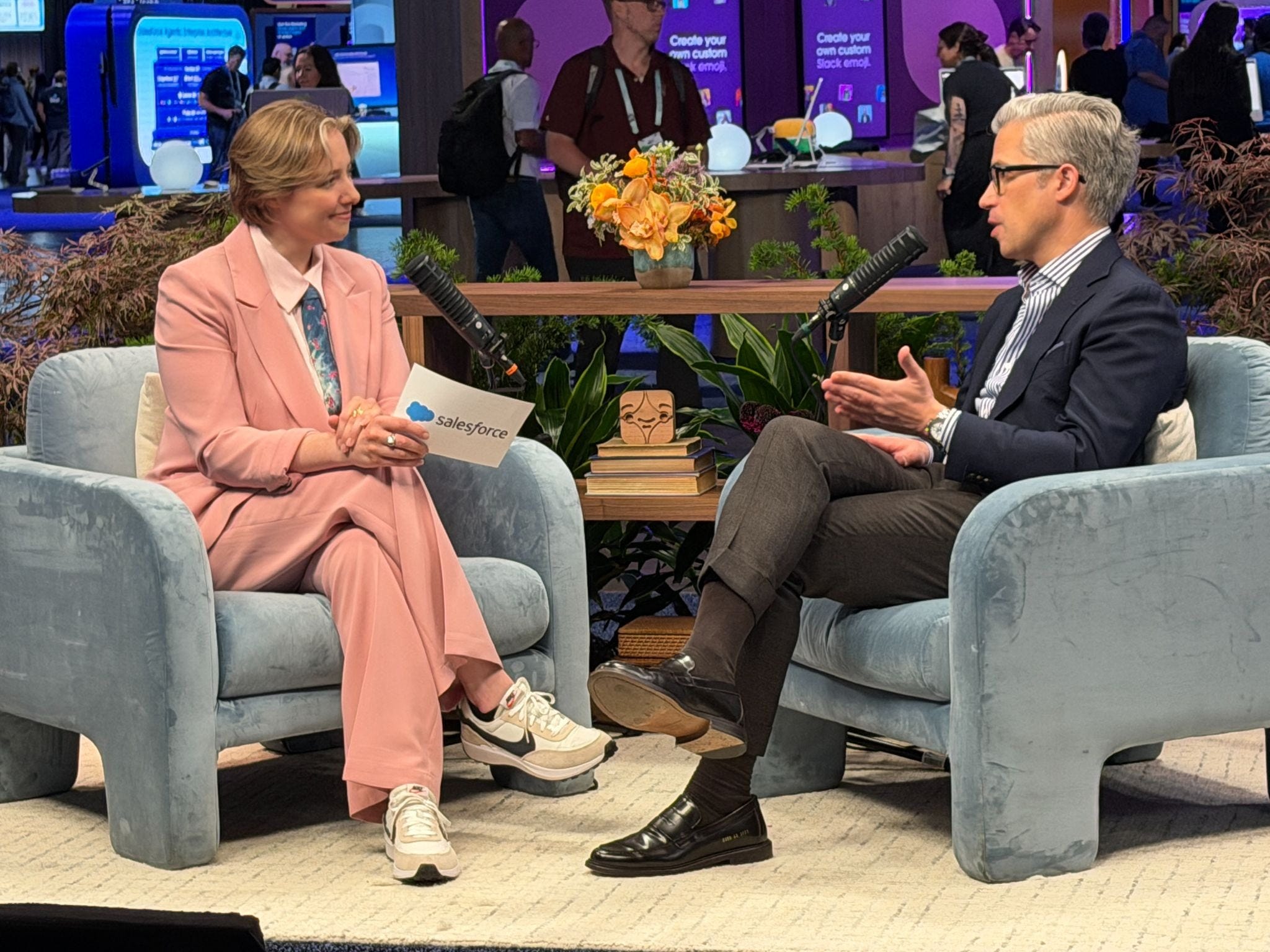
See more from my conversation with Eric Zenz.
The promise of AI agents, like digital coworkers who can reason, decide, and act, is that they remove the barriers between marketers and marketing.
In a keynote, I heard:
Agentic AI will accelerate campaign creation by 10-15X. In fact, Rawlings is already reporting 75% faster campaign creation with Agentforce Marketing.
It removes bottlenecks, it knows what happened, why, and what to do next.
That frees up marketers to MAKE, creating brand experiences customers love. Owning strategy, shaping stories, campaigns and experiences.
“No marketer wakes up in the morning saying, I want to segment an audience. AI relieves repeatable, unenjoyable tasks for marketers, it allows them to focus on the things that really matter most, like an understanding of the market and understanding of the customers. The company wins, the customer wins, and marketers win.”
- Tim Peyton, VP Marketing at Pearson
And it was clear Salesforce wants to help marketing teams get started fast with agents, providing “an agency of agents out of the box” such as:
Agentforce Coworker - Which helps marketers answer questions like: What budget can I cut from under-performing channels or campaigns? What channels should I invest more in? What’s working?
Agentforce Marketing Outcomes Agent - Enabling self-optimizing and autonomous campaigns (yes really) working around the clock, allowing marketers to experiment more and with greater speed.
Agentforce Content Studio - Among many other capabilities, a marketer could simply describe a campaign using natural language, and an agent will generate various content types. That means no gatekeepers, no delay, and the ability to scale personalization across channels (hello omnichannel!)
“Pearson has a point of view that the future is not AI or people. It’s really about AI and people. And the power of employees and agents working together to drive outcomes”
- Tim Peyton, VP Marketing, Pearson
2. Every channel is becoming a two-way experience
Marketing channels used to broadcast information. Now, they can listen, decide, and act with agents, which could turn every channel into a two-way sales experience.
Some examples I saw at Connections of one-way channels becoming two-way conversations:
Piper, an AI SDR agent from Qualified, an impressive website conversion agent that helps build real pipeline. Piper not only handles lead qualification, ID and routing, it also acts like the front door of a business. In the demo we saw, it spoke French and could switch to any other language that a visitor may speak. “No forms, no delays.”
Hunter, an AI Prospecting Agent can actually autonomously prospect and nurture leads. For example, we watched it create bespoke emails to prospects based on context. That means our sales reps can spend more time closing deals.
I heard how agents were answering a critical Salesforce brand channel - the 1-800-no-software line. AI agents provide 24/7 voice support and enable live answering no matter what time of day someone is calling.
At Pearson from the support side, they are managing 40% of support requests using an agent to reason, route, and solve problems automatically in real-time. From the sales side, Pearson launched an educator agent for their website helping customers navigate their extensive catalog and recommend products based on each educator’s specific needs. And across these two business functions, Service and Marketing operate from one single source of truth - so any handoff between the two can be smooth.
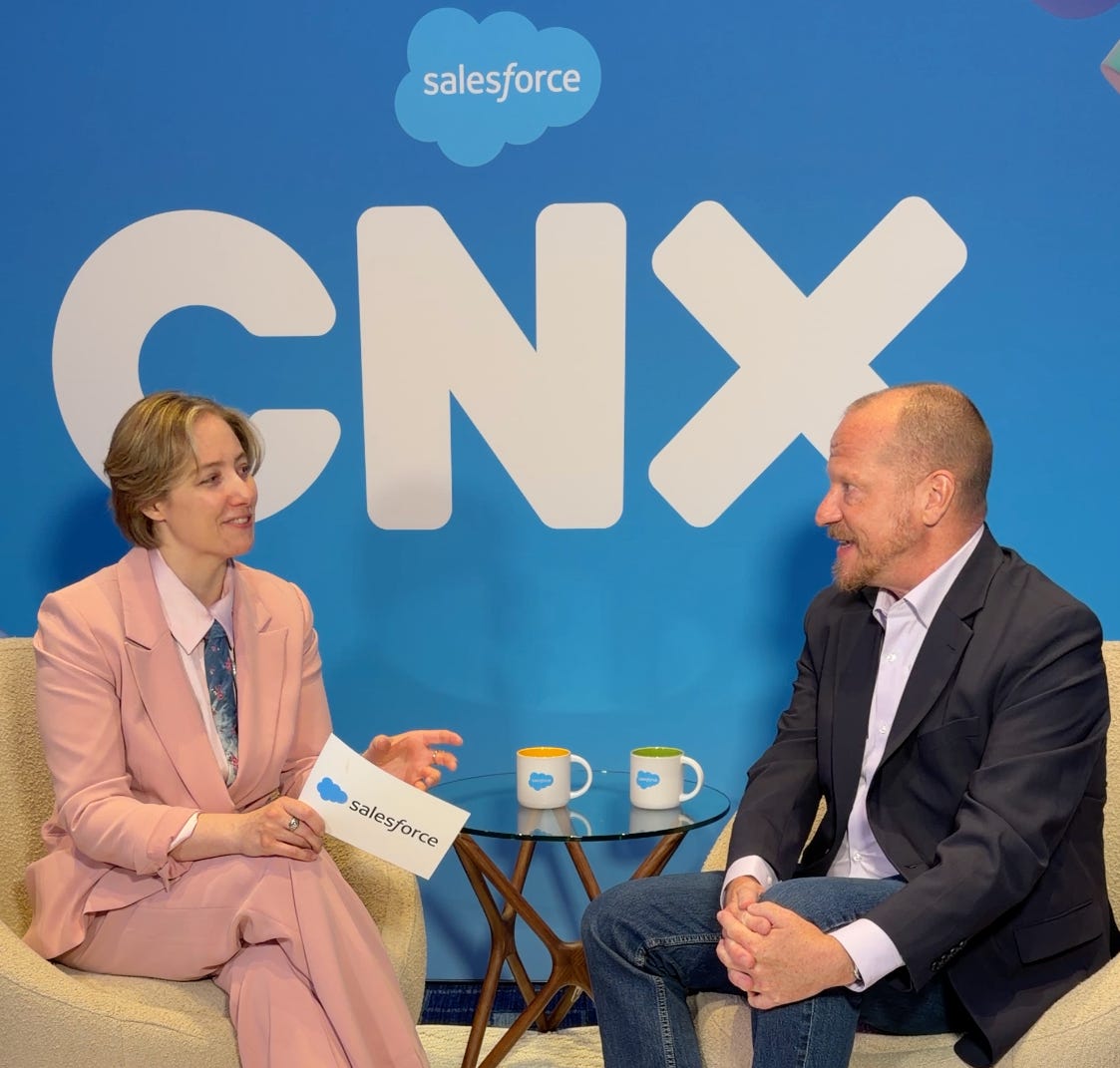
3. Marketing is shifting from campaign management to agent orchestration
These technology capabilities do a lot more than give us new toys to play with.
All week I considered how this might fundamentally change the role of marketing and the marketing technologist.
I believe we can set our sights a bit higher and shift some of our thinking. For example, static campaigns become autonomous and always-on.
Our channels that were once one-way now can be two-way conversations.
The demand for personalized content can now be met with a scalable force, rather than bog our teams down in supply chain holdups.
And, because we are moving from operating tools to orchestrating agents, that means the UI of tools like Salesforce.com becomes less of a focus, as interfaces move into natural language.
Orchestrating agents becomes the new marketing skill set.
4. The competitive advantage is data and context
Business leaders may be rightfully wary of AI slop… but that’s really a governance problem that can happen when multiple teams are spinning up their own AI stack.
The key to avoiding AI slop for businesses: Agentforce is grounded in your data.
All companies have years of customer data. This is context, whether it be past transactions or behaviors.
When agents operate within existing business logic, permissions, and workflows, it helps keep brand experiences consistent, and reduces the technical debt and data fragmentation.
Shared context and guardrails matter - and reduce the slop!
For nearly three decades, Salesforce has envisioned how customer data opens up new possibilities for brands, ever since the advent of the CRM.
Today, the company is positioning themselves as an agentic marketing platform, whose promise is to unify customer and business data - including content, conversations and workflows.
This is the foundation for AI agents to be successful, giving them the shared context needed to reason, decide, and take action across every moment in the customer lifecycle.
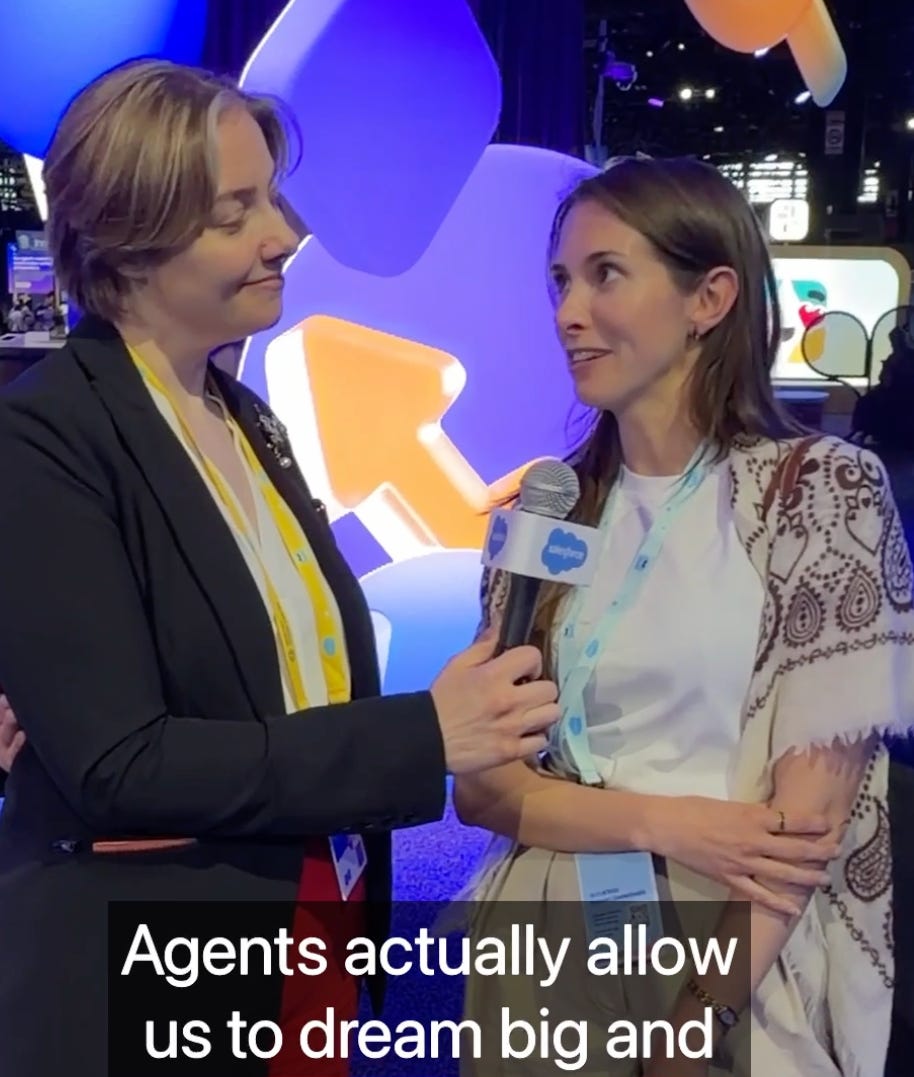
Watch how attendees of Connections are using agentic AI
5. The winners will be the teams who experiment now
I heard that the #1 challenge for marketers today is “operationalizing AI.”
The truth is, there is plenty of low-hanging fruit.
For example, we can start with our existing email campaigns - turning them into two-way conversations instead of a broadcast channel.
We can start using agentic coworkers to build segments or analyze performance with natural language - like we were chatting in Slack to a colleague.
We can improve the dreaded touchpoints between marketing and sales (something only a quarter of teams are satisfied with today).
We can add an SDR or service agent to our website that is incredibly powerful, contextual, and smart.
And so much more.
“Customer-facing agentic tools start to introduce marketers to the art of the possible. Things that three months ago or six months ago were not possible suddenly are.”
Tim Peyton, VP of Marketing at Pearson
And, this goes far beyond quick wins.
Agents allow marketers to “dream bigger” according to one attendee I interviewed.
An inflection point.
From the POV of someone who has been in marketing technology for nearly 17 years (wow, time flies when you’re having fun), this is most definitely an inflection point.
I learned recently there are now more agents on the web today than humans - a milestone not expected until 2027.
I can’t predict exactly how the future of marketing will look, but I know one thing for sure: it will be agentic AF.*
Thanks again to Salesforce for inviting me to be part of this year’s Connections 2026!
Catch up on all the announcements here.
*Agentforce, of course.